
JOHN 1:1-18
Focus verse: ‘In him was life, and his life was the light of all men.’ (John 1:4)
Old Testament lens: ‘Let there be light.’ (Genesis 1:3)
The opening of the Gospel of John is like the overture to a great symphony or opera — it introduces key themes that will unfold through the rest of the book. The Gospel of John invites readers to ‘Come and see’ Jesus,(1) the true light who gives life. Jesus is the Light of the World. In these first eight verses, John reveals who Jesus truly is: the eternal Word of God, the bringer of life and light into a dark world. From the beginning, we see that Jesus is not just a man — He is the Word who was with God and was God. He was present at creation and was the one through whom all things were made. This echoes the creation account in Genesis, where God speaks and light bursts into existence: ‘Let there be light’ (Genesis 1:3). In the same way, Jesus brings the true light into a world shrouded in spiritual darkness.
John 1:4 says, ‘In him was life, and the life was the light of men.’ This theme of life is central to John’s Gospel. More than any other book in the Bible, John focuses on life — eternal life, abundant life, life through Jesus. The Gospel was written, as John tells us in 20:31, ‘so that you may believe that Jesus is the Christ, the Son of God, and that by believing you may have life in his name.’ Jesus is also introduced as light that shines in the darkness, and the darkness cannot overcome it.
John invites us to come and see Jesus! John 1:14 says, ‘We have seen his glory, the glory of the one and only Son, who came from the Father, full of grace and truth.’ Amy Ward says: ‘As we see His glory and as our lives are giving God glory, as we’re looking more like Him every day … we can’t help but be radically obedient to some of the craziest stuff.’(2) The Early Church Fathers and the Celtic saints were radically obedient to some of the craziest stuff!
The Early Church Fathers who inspired the Celtic Church
Anthony of Egypt (251–356), Egypt, ‘The Father of monasticism’
‘I have seen the snares of the devil spread out over the whole earth, and I said: “Who can escape them?” … and I heard a voice saying: “Humility.”’(3)
Anthony is considered the father of Christian monasticism, particularly Eastern monasticism. He left the world to seek God in solitude and was admired and imitated.
‘At the reading of the Gospel, he had heard the words: “If you would be perfect, go, sell what you possess and give to the poor, and you will have treasure in heaven; and come, follow me.” And at once he resolved to give away all he had to the poor, and he departed from his parents’ house.’ He then followed Jesus and John the Baptist’s example and went into the wilderness, which was seen as the place to confront the enemy of our souls. The Early Church saw John the Baptist as a prototype of the monastic life. The ancient world knew that monasticism was not about running away. The reason for his solitary lifestyle was that it facilitated his engagement in spiritual warfare against the enemy. The second main reason for his solitary life was that solitude was recognised to be a ‘furnace of transformation’. In other words, it was ‘not a private therapeutic place … (but a) place of conversion where the old self dies and the new self is born’.
‘Solitude is not simply a means to an end. Solitude is its own end. It is the place where Christ shines his light on the inner recesses of our souls and remodels us in his own image and frees us from the victimising compulsions of the world.’ Anthony’s life was marked by radical renunciation of the world, deep humility, and self-denial. He resisted fame even as his reputation spread, choosing to live in solitude and obscurity. His humility was not passive but deeply spiritual, rooted in self-knowledge and dependence on God.
For both Anthony himself and for Athanasius (his biographer), Jesus’ resurrection was as important as the cross. The goal of the ascetic life was union with God, participation in divine life, and restoration of the image of God in man. Later this would call be termed theosis (θέωσις). To be continually transformed into the likeness of Jesus was the goal of both Anthony and Athanasius.
Many Celtic saints — like St Cuthbert, St Kevin, and St Columba — imitated Anthony’s life: they lived in remote places (islands, mountains, forests) and practised solitude, intense prayer, and austerity. They fought spiritual battles with demons, similar to Anthony’s desert experiences. Celtic monks saw the wild landscapes of Ireland and Britain (bogs, islands, caves) as their own ‘deserts’.
In the final days of his life, St Columba, the Celtic saint and Irish monk and missionary, was living at the monastery he had founded on the island of Iona. He had spent decades spreading the Christian faith and building a community deeply rooted in prayer, Scripture, and worship. As Columba felt his life drawing to a close, he spent increasing time in solitude, prayer, and Scripture reading. According to Adomnán of Iona, Columba’s biographer,(4) Columba had a special devotion to the Gospel of John, particularly the prologue.
The story goes that on the very night before his death, Columba was seen in the scriptorium of the monastery, working by candlelight, copying a portion of the Gospel of John. He was focused on the beginning of the Gospel, writing the words, ‘In the beginning was the Word, and the Word was with God, and the Word was God.’ According to tradition, he never finished copying the verse. Just as he wrote the word Verbum (the Word), he laid down his pen, went to pray, and peacefully passed away shortly after. His monks found him in the early hours of the morning, lying before the altar in the chapel; his final act was one of devotion to the Word made flesh.
John 1 was a theological foundation for Columba, but a deeply personal devotion. The idea that Jesus was the divine Logos, eternal, present at creation, and made flesh, captured Columba’s understanding
REVIVAL
Jesus is the true light who gives life. Today we cannot ignore the fundamental battle between light and darkness that is raging around us. Whether we like it or not we are in a war. Is the Lord calling you to engage in that war? If so, what does it mean to ‘come to Jesus’ and to get into right relationship with Him?
Roy Hession, of the East African Revival, says ‘if… we are to come into this right relationship with him, the first thing we must learn is that our wills must be broken to his will. To be broken is the beginning of revival. It’s painful, it’s humiliating but it’s the only way. It is being “not I but Christ” and the “C” is the bent “I”’.(5) The Lord Jesus cannot live in us, fully unveiling Himself through us, until the proud self within us is broken.
PRAYER
Shine your light on the inner recesses of my soul, remodel me in Your own image and free me from the victimising compulsions of this world. I will come and see You … the Glory of the Son, full of grace and truth … I will come and see. Shine Your light on me.
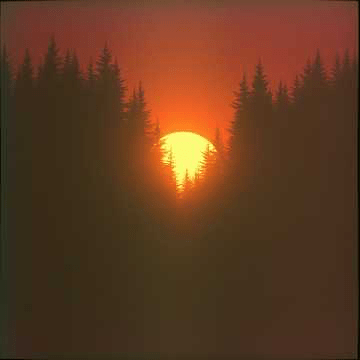
Come and see (Click on picture below to listen to song)
____________
(1) Hays, R. Echoes of Scripture in the Gospels Baylor University Press (2018), 281
(2) Ward, A. YWAM South Africa teaching on 28/11/2025
(3) Athansius of Alexandria, The Life of St Anthony Dalcassian publishing Company (2022)
(4) Adumnan, The Life of Colomba, Penguin Classics (1995)
(5) Hession, R.The Calvary Road, Rickford Hill (2003)

 UNBLOCKING THE WELL OF THE LIVING WORD
Leave a comment