
John 6:25–51
Focus verse: ‘Then Jesus declared “I am the bread of life. He who comes to me will never go hungry.’” (John 6:35)
Old Testament lens: ‘and Moses said to them, “It is the bread that the Lord has given you to eat.”’ (Exodus 16:15)
When CS Lewis was asked by a reporter how he made his decision for Christ, the closest he would get to using that language was saying ‘I was decided upon.(1) Jesus is the one upon whom the Father has set His seal. God, like a goldsmith with a hallmark, or like a king with his great seal, has stamped Him with the mark that declares not only where He comes from, but that He carries His authority.
When Jesus says, ‘I am the bread from heaven’, the crowd realise that Jesus is pointing out that they can’t just expect bread on demand, that if this really is a heaven-sent renewal movement, there’ll be a new standard to which they must sign up. This means that God is requiring a complete change of heart. Jesus is challenging their motives, saying they are looking for Him not because they saw a true sign of God’s kingdom, but because they want more bread. Then in one of the most important teachings in John’s Gospel, Jesus, as the Bread of Life, tells them not to work for food that perishes, but for food that lasts for eternal life, which He, the Son of Man, will give. He is not offering literal bread anymore; instead, He’s offering Himself. When He says, ‘I am the bread from heaven’, He’s pointing to a deeper truth: that He is God’s true provision, sent to nourish souls, not just stomachs.
This is the first of Jesus’ famous ‘I am’ sayings in John. These sayings point to His divine identity and purpose. Here, ‘I am the bread of life’ echoes God’s self-revelation in the Old Testament, linking Jesus directly to the divine. The crowd finds this teaching hard. They recall how Moses gave their ancestors manna in the wilderness and expect Jesus to perform another miracle, another sign, as proof of His authority. The crowd has the right passages in mind (Exodus 16 and Psalm 78) but the wrong interpretation. Jesus corrects them: it wasn’t Moses who gave the manna, but God. The manna was only a shadow of what God truly wanted to give. It filled their stomachs for a day, but those who ate it still died. Jesus here offers bread that brings eternal life.
The Early Church Fathers who inspired the Celtic Church
St Leo the Great (died 461), Rome
‘Christian, remember your dignity, and now that you share in God’s own nature, do not return by sin to your former base condition.’(2)
This expresses St Leo’s theology of the Incarnation. Whether we are ruled by consumerism (wanting our stomachs filled) or by the fear of authority (political or military), there are thrones that are competing for authority in our lives. Pope Leo faced down a barbarian leader and inspired the Celtic saints to do likewise.
One compelling narrative about St Leo, which might have inspired the Celtic Church, is how he confronted Attila the Hun in 452 during the siege of Rome. According to tradition, as Attila was advancing on the city with a massive force, panic was widespread. Leo went out in full papal regalia to meet Attila personally and persuaded him to turn back, sparing Rome from destruction.
This event highlights several qualities. Leo’s bravery to face a terrifying barbarian leader, relying on faith and moral authority rather than military might. It underscores the power of prayer, humility, and spiritual authority over brute force, and his role as protector of not just the Church but the people of Rome.
The Celtic Church, with its emphasis on holy leaders (who were both spiritual and community defenders), would likely have seen Leo’s example as a model of the bishop or abbot as a powerful mediator between God’s authority and worldly powers.
St Columba went to the land of the Picts, a group of tribes who lived in what is now northern and eastern Scotland, and is said to have met King Bridei, who ruled from near Inverness. According to Adomnán’s Life of St Columba (written about a century later (c697)(3) Columba went to meet King Bridei at his fortress. The king’s gatekeepers refused him entry, but Columba made the sign of the cross, and miraculously the barred doors opened. Impressed, Bridei received him respectfully, and Columba later helped spread Christianity among the northern Picts.
In Celtic Christianity , particularly Irish, Scottish, and Welsh traditions , there are stories involving miraculous provisions of food, including bread. In one story St Brigid gave away all the monastery’s food to the poor during a famine. When more guests arrived shortly afterwards, she prayed, and the stores were miraculously refilled, including loaves of bread. There are other stories of food multiplication with Celtic saints. St Ciarán of Clonmacnoise (c516–544) saw a small gift of food, offered to a guest, multiplied to feed a large group.
REVIVAL
In John 6:26–27 it is clear that the crowd was seeking to have their stomachs filled rather than seeking Jesus. Their god was their stomachs! Are we ruled by consumerism? Are we ruled by the fear of authority, political or military? Are there thrones competing for authority in our lives?
National revival requires the identification of ‘thrones’, governing powers or seats of authority. Some thrones are personal, others are familial, corporate, territorial or national, but they all oppose the will of the Lord being accomplished. Effective praying for the British Isles will require consecration to the Lord’s will and purpose, and personal repentance for sins that may currently stain the conscience. Where there is a coming under other ‘thrones’, repentance will be necessary.
James Goll woke up from a dream with the words he had heard in his dream: ‘when my people will care for, cherish, nurture and love, the bread of my presence like a parent does his newborn child, then revival will come.’(4)
PRAYER
Lord, ‘Oh that You would rend the heavens and come down that the mountains might flow down at Your presence.’ (Isaiah 64:1) You heard the prayers of Peggy and Christine Smith in the Isle of Lewis, asking You to pour out Your Spirit on thirsty ground. Jesus, You are the bread from heaven come down from above, given for the world, a sacrifice of love. We long for You to manifest Your presence as You did in the Isle of Lewis in the Hebridean Revival. Bring me to a place of caring for, cherishing, nurturing and loving the bread of Your presence like a parent does a newborn child. I repent of submitting to other thrones and authorities in my life. Lord, come and have Your way in my life, and in my nation’s life, I pray. I consecrate myself to Your will and Your purpose.
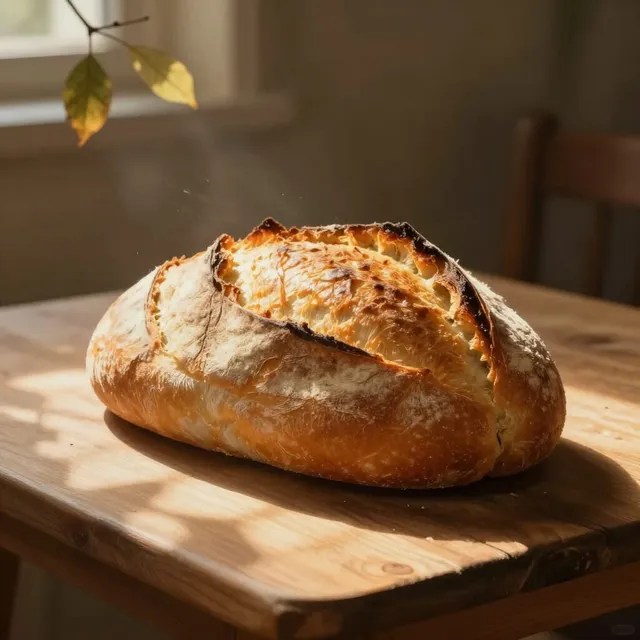
Bread from heaven (CLICK ON PICTURE TO LISTEN TO SONG)
__________________
(1) Wright, N.T. John for everyone, Part 1, SPCK,(2002), 82
(2) St Leo the Great, from his Christmas sermon (Sermon 21 or 22 in nat.Dom.) in Nicene and Post Nicene Fathers (Second Series , Vol 12)
(3) Adomnan’s Life of St Colomba, Penguin Classics (1995)
(4) Goll, J. Praying with God’s heart , Chosen books.

 UNBLOCKING THE WELL OF THE LIVING WORD
Leave a comment