
John 11:1–44
Focus verse: ‘Lord, if You had been here, my brother would not have died.’ (John 11:32)
Old Testament lens: ‘Even though I walk through the valley of the shadow of death I will fear no evil’ (Psalm 23:4)
John 11 is one of the most emotionally intense and theologically rich chapters in the Gospel of John. At its surface, it’s the story of Jesus raising Lazarus from the dead, a dramatic display of divine power. Underneath, it is a masterclass in how God forms wholehearted love in the hearts of His people.(1) It confronts our assumptions about God’s love, timing, and methods. In particular, it challenges our desire for a God who evades pain, when in fact, we follow a God who chooses to enter into pain, and brings us with Him.
The chapter begins with an unsettling paradox. John 11:5 says, ‘Now Jesus loved Martha, and her sister, and Lazarus.’ Yet the next verse tells us, ‘So when He heard that Lazarus was sick, He stayed two more days in the place where He was.’ This is not the love we expect. We assume love responds quickly, prevents suffering, and avoids death. But Jesus deliberately waits, knowing that Lazarus will die. Why? Because Jesus is after more than healing. He’s after glory, not just His own, but a shared glory that only comes through human partnership in pain. He chooses those He loves for this crucible because He intends to form something eternal in them. This isn’t the evasion of suffering, it’s the conquest of death, through love forged in the fire of disappointment.
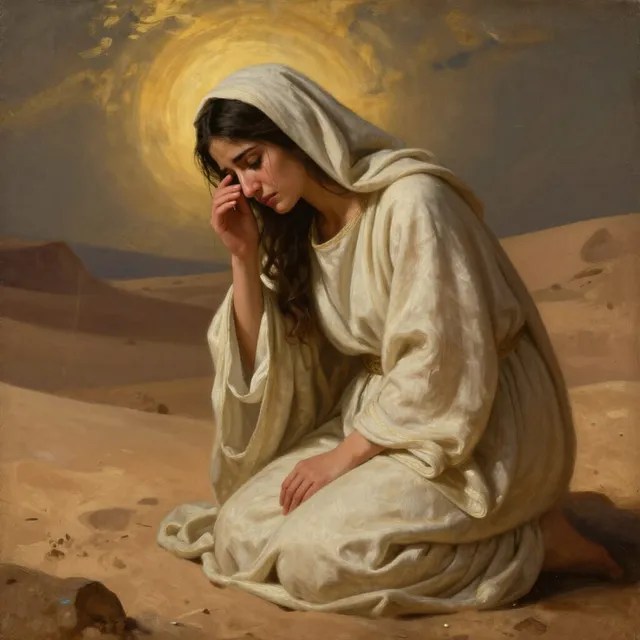
This is especially painful when we consider Mary. When Mary finally comes to Jesus, she falls at His feet, not with accusation, but with honest, broken-hearted love: ‘Lord, if You had been here, my brother would not have died.’ It’s not a theological argument. It’s an intimate transaction. She is weeping. And then , Jesus weeps. Her tears move Him. Her groaning pulls on His heart until He groans deeply in His spirit. This is the mystery of partnership. God doesn’t just act for us, He longs to act with us. He waits to be moved by love that says, ‘Even in my tears, I trust You.’ This is the real glory. The glory is found in Mary’s refusal to let go. Her weeping provokes His weeping. Her love draws Him into action. And when those two cries, the human and divine, meet, resurrection happens.
The invitation of John 11 is: let your tears become the currency of love. Don’t bypass the process. Don’t let your theology excuse you from the wrestle. Enter in. Weep. Worship. Refuse to walk away. God is after not just the fulfilment of the promise, but the formation of a heart that loves Him in the process. John 11 is a story of resurrection and a blueprint for divine partnership.
The Early Church Fathers who inspired the Celtic Church
St Ephrem the Syrian (306-373), Turkey, ‘The Harp of the Holy Spirit’
‘Grant me tears of compunction and repentance leading to salvation, that I might lift the intelligible eyes of my soul to you.’ (2)
In the Eastern Orthodox tradition, there are several Church Fathers and saints who emphasise ‘tears of compunction’.
For St Ephrem, compunction and its tears are not produced by effort alone but are a visitation of divine mercy, a grace that purifies the heart. Tears are thus a divine spring within the soul; they are God’s mercy welling up inside a person, cleansing and sanctifying from within. Ephrem prays for tears, aware that they are a grace one cannot fabricate: ‘Grant me, O Lord, a fountain of tears that my heart may be purified, that I m ay wash the defilement of sin and behold You in purity.’ Ephrem sees tears as a second baptism. ‘Tears before You, O Lord, are more precious than baptismal water; for baptism cleanses the body once, but tears wash the soul continually.’ This theme reflects the Syrian ascetic tradition, where continual weeping is the mark of one who lives in perpetual conversion.(3)
In Ephrem’s spirituality, tears are the truest prayer. (He contrasts cold, articulate prayer with the fiery prayer of tears.) ‘Tears are the tongue of the soul before God, and when the lips are silent, the heart speaks through tears.’ Ephrem’s imagery for tears is deeply therapeutic. They are not only cleansing but healing fire and water combined: ‘Tears, O Lord, are fire and water together: they burn the evil within me, and they wash my sins away.’
Tears thus transform the soul, restoring it to its original purity, as though returning it to Eden. He portrays the weeping penitent as re-entering Paradise through the gate of tears: ‘Through Your mercy, O Lord, the gate of Paradise has been opened for the tears of the repentant.’ Ephrem, like many Syriac mystics, expresses a sweetness in sorrow, a ‘joyful mourning’ that comes from tasting divine mercy even amid grief for sin: ‘Blessed is he who has mixed in his tears the joy of the heart that hopes in mercy; for his mourning becomes a feast, and his tears are pearls before the King.’ This paradox, joy within tears, is central to Ephrem’s mystical theology: tears are both the fruit of sorrow for sin and the first taste of salvation. Tears are the rain of Eden watering the soul, and they will become rivers of joy in the next world: ‘Blessed are the tears that the merciful Lord gathers as pearls for the crown of the repentant.’
There are a number of Celtic saints whose lives include resurrection stories or themes that parallel the resurrection of Lazarus, such as the raising of a king’s son from the dead by St Ailbe of Emly (intertwined with legend). This miracle echoes similar resurrection accounts in the lives of other saints, such as St Patrick, and reflects early Irish hagiography’s emphasis on divine power overcoming death through the agency of holy men.
REVIVAL
In Mary’s tears, Jesus found someone to partner with Him for a resurrection. In Psalm 2, we see Jesus sitting at the right hand of the throne of God, looking for partners to cry out with Him for the nations as His inheritance. In his book The Gift of Tears, (4) Corey Russell says the Lord is bringing his Church to a new place of prayer, he is raising up a generation of revival intercessors, he calls people ‘Nasharites’ (5) who are willing to stand in the gap like Father Nash, who prayed and co-laboured with Charles Finney the revivalist to see the Second Great Awakening. The Lord is looking for a man or a woman again as in Ezekiel 22:30 to stand in the gap like Mary and stand in the gap like Father Nash. Will it be you?
PRAYER
Jesus is looking for a shared glory that only comes through human partnership in pain, to see our nation revived, even resurrected. Can you say the following to Jesus? You were not late … You were drawing me near to see You clearer through every tear. My tears became the door to grace. You met my weeping face-to-face … even in my tears I trust in You.
Even in my tears (CLICK ON PICTURE BELOW TO LISTEN TO SONG)
____________________
(1) https://allenhoodonline.com/extravagantlove
(3) Greek collections titled “Prayer of St Ephrem, for Tears”
(4) Russell, Tears
(5) Russell, C. Nasharites

 UNBLOCKING THE WELL OF THE LIVING WORD
Leave a comment