
John 17:1–26
Focus verse: ‘I protected them and kept them safe by that name you gave me’ (John 17:12)
Old Testament lens: ‘I will place over them one shepherd, my servant David, and he will tend them and be their shepherd’ (Ezekiel 34:23)
This moment in the Gospel is like a pause in a dramatic play, (1) just as in Shakespeare’s play, Hamlet, Hamlet pauses before taking revenge, ‘listening in’ to his stepfather praying. He was uncertain of what his stepfather was really praying, and he paused, and we should pause here too.
Jesus is praying, and while we can’t fully understand the mystery of conversation between the Son and the Father, we are invited to listen in, to reflect, and even to join Him. In this moment, He is revealing the heart of God. His prayer gathers everything the Gospel has shown so far: His unity with the Father, His mission to the world, and His love for His followers.
• First, Jesus prays for Himself. He says His work is done — He has completed all the Father asked Him to do. Now, He asks to be glorified, to return to the Father’s presence in glory. This isn’t selfish. It’s the fulfilment of God’s plan. Jesus, as the Messiah, is stepping into the role promised in the Old Testament, a King who rules not just Israel but the whole world, as in Psalm 72. His glorification is not about personal praise, but about taking up the throne of God to rule with justice and love.
• Then Jesus prays for His disciples. He knows He is about to leave them, and they will face opposition from the world, just as He did. He doesn’t ask for them to be taken out of the world, but for them to be protected in it. He prays that they will be set apart, or ‘made holy’ for God’s mission. This idea of holiness is rooted in the image of the Temple and the high priest, who was set apart to enter God’s presence and pray for the people. In the same way, Jesus, the true High Priest, is asking the Father to consecrate His disciples so they can continue his work.
• Finally, Jesus prays for all future believers, for us. This is where the prayer becomes deeply personal. Jesus asks that all His followers may be one, united in love and truth. This unity is essential. This unity, fragile though it may seem, is a powerful witness. And in the end, Jesus’ desire is for all His people to be with Him and to see His glory, the glory of God’s love. Our unity convinces the world that Jesus is truly from God.
In Jesus’ prayer we hear His heart for us, for holiness, protection, mission, and unity.
The Early Church Fathers who inspired the Celtic Church
St Cyprian of Carthage (died 258), North Africa, cited on ecclesiology and martyrdom
‘He can no longer have God for his Father who has not the Church for his mother.’ (2)
In John 17:22, Jesus says, ‘I have given them the glory that you gave me, that they may be one as we are one.’ St Cyprian was known for his writings on Church unity, holiness, and perseverance in faith under persecution. He was bishop of Carthage in North Africa during a time of intense persecution under the Roman Empire. Around 258, Cyprian was arrested during the persecution of Christians and ultimately executed by beheading for refusing to renounce his faith. His pastoral concern for maintaining unity and discipline amid persecution and internal conflict parallels challenges faced by the early Celtic Church.
St Aidan of Lindisfarne (died 651) was one of the most beloved figures in Celtic Christianity and a powerful embodiment of the spirit and themes found in John 1 7, particularly Jesus’ prayer for unity, sanctification, and divine love. Aidan’s life resonates with these themes in deeply practical and spiritual ways:
• First, ‘unity’. ‘That they may all be one …’ (John 17:21) Aidan embodied unity not through doctrinal control but through relational fidelity. He built bridges between cultures: Irish, Pictish, and Anglo-Saxon. His mission was not to impose, but to walk alongside.
• A second way was through ‘Sanctification in truth’ — ‘Sanctify them in the truth; your word is truth.’ (John 17:17). Aidan lived what he taught, walking from village to village, praying, fasting, and serving.
• Third, through Aidan love was made visible, ‘So that the love you have for me may be in them’ (John 17:26). For Aidan, glory was the radiance of God’s presence in everyday life. The sacred and the ordinary met in his walking, praying, teaching, and healing. His life reflected the humble glory of Christ — self-giving and radiant with quiet holiness.
• Fourth, he had intimacy with God. ‘You, Father, are in me, and I in you’ (John 17:21). Like Jesus, Aidan often withdrew to pray alone, sometimes for hours at night. He lived in constant communion with God, which fuelled his ability to give of himself to others, living by abiding presence.
REVIVAL
As we pray for revival and a recovery of faith in the British Isles, we need a fresh breakout of the Holy Spirit; unity will be key. However, a right understanding of Jesus as our great High Priest is of the utmost importance too.
Andrew Murray said, ‘Of all the promises connected with the command, abide in me, there is none higher and none that sooner brings the confession, not that I have already attained or am already made perfect, than this. If ye abide in me, ask whatsoever ye will, and it shall be done unto you. Power with God is the highest attainment of the life of full abiding. And of all the traits of a life like Christ, there is none higher and more glorious than conformity to him in the work that now engages him without ceasing in the Father’s presence, His all-prevailing intercession. The more we abide in Him and grow unto His likeness, will His priestly life work in us mightily, and our life become what His is, a life that ever pleads and prevails for men.’
Murray also said, ‘Thou hast made us kings and priests unto God. Both in the king and the priest the chief thing is power, influence, blessing. In the king it is the power coming downward, in the priest the power rising upward, prevailing with God. In our blessed priest-king, Jesus Christ, the kingly power is founded on the priestly. He is able to save to the uttermost, because … he ever liveth to make intercession. In us, his priests and kings, it is no otherwise. It is in intercession that the Church is defined and wields its highest power, that each member of the Church is to prove his descent from Israel, who, as a prince, had power with God and with men, and prevailed …’(3)
PRAYER
Help me to see prayer not as the main means of maintaining my own Christian life but as the highest part of the work entrusted to me, the root and strength of all other work. Lord, teach me how to be conformed to the work You, Lord Jesus, are engaged in, Your high priestly role of all-prevailing intercession. Teach me how to prevail before God and man and to see Europe re-evangelised … and may it all be for Your glory. Lord, teach me how to prevail in prayer.
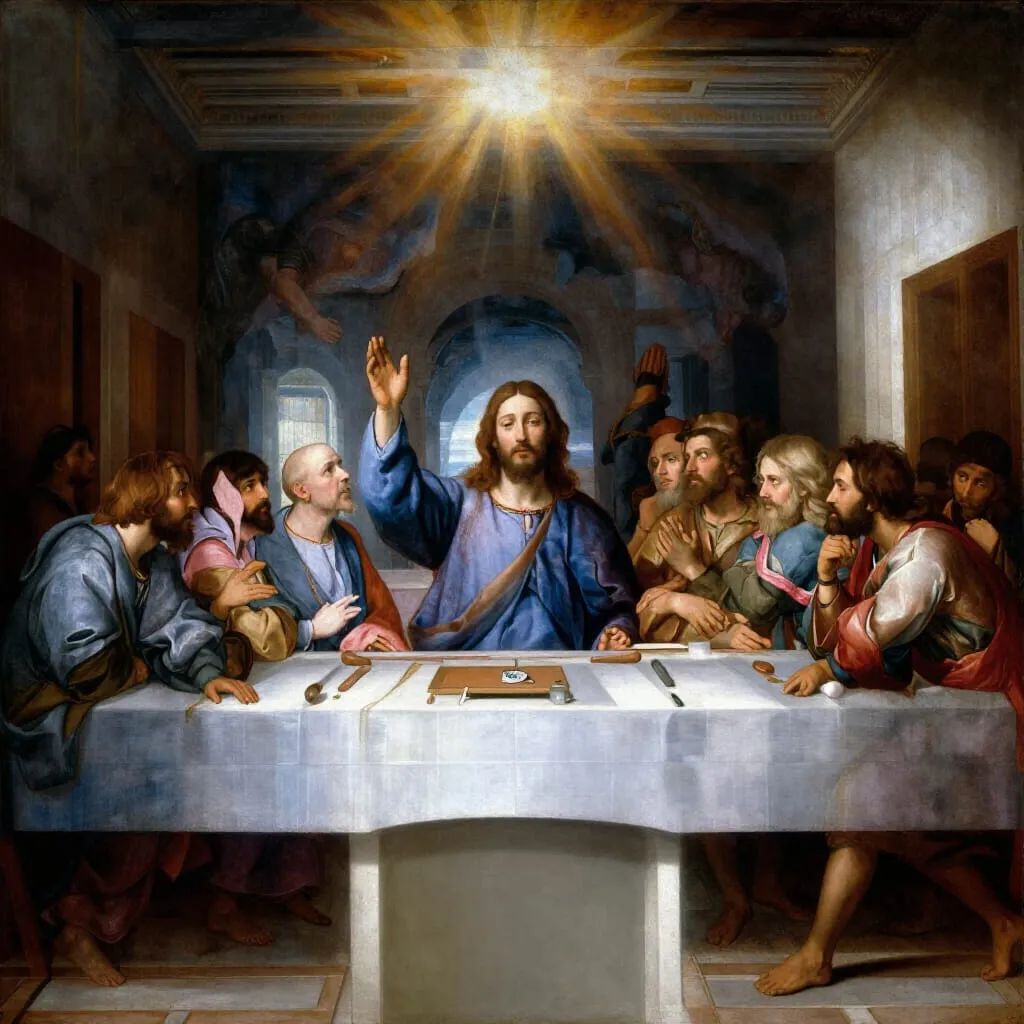
Father, Glorify your Son (CLICK ON PICTURE TO LISTEN TO SONG)
____________________
(1) Wright, N.T. John for Everyone, part 2, SPCK (2002), 90, 91.
(2) Cyprian of Carthage, Treatises of Cyprian, (1.6) CreateSpace, (2015).
(3) Murray, A. With Christ in the School of Prayer, Introduction, Whitaker house. (1981).

 UNBLOCKING THE WELL OF THE LIVING WORD
Leave a comment