
John 18:1–40
Focus verse: ‘Are you the king of the Jews?’ (John 18:33)
Old Testament lens: ‘The Lord says to my Lord, sit at my right hand, until I make your enemies, a footstool for your feet’ (Psalm 110:1)
Unlike today’s democratic governments, kings and rulers in Jesus’ time gained power through inheritance or violence. (1) The Jews, like others, knew kings as men who used force. Judas Maccabeus gained power through military victory, and Herod the Great secured kingship through Roman approval after defeating their enemies.
So, when Pilate hears that Jesus might be claiming to be ‘King of the Jews’, he assumes this is a political or military threat, something that could challenge Roman rule. Pilate sees a poor man from Galilee, deserted by his followers. There’s no army, no rebellion. Still, to be safe, Pilate questions him: ‘Are you the king of the Jews?’
What follows is not a straightforward answer. Jesus responds with a question, something typical of him. When Pilate brushes off Jesus’ question as irrelevant Jewish politics, Jesus then clarifies that His kingdom does not come from this world. That distinction is crucial. Jesus does not say His kingdom is not of this world, as if it had nothing to do with the earth at all. Instead, His kingdom’s origin is not earthly, it doesn’t come from human power, violence, or political manoeuvring. If Jesus’ kingdom were like the kingdoms Pilate knows, His followers would have fought to rescue Him. But Jesus’ kingdom is different, it is for this world but not from it. It operates by different values, centred not on force, but on truth. Jesus says He came into the world to bear witness to the truth, and that everyone on the side of truth listens to Him.
Tom Wright draws attention to how radical this claim is. In Pilate’s world, ‘truth’ is power, the kind enforced with swords or, as we’d say today, ‘at the barrel of a gun’. For Rome, truth is established by whoever is strong enough to enforce it. But Jesus says He has come to reveal the truth, and He is the truth, a truth that does not conquer by killing, but by dying. The truth of God’s kingdom is that Jesus, the innocent King, is dying in place of the guilty. In the end, Pilate sets free Barabbas, a rebel or revolutionary, perhaps someone who really did want to be king by force, while sending Jesus, the true King, to die. This is John’s picture of what kingship and truth really look like in God’s eyes: a King who dies for his people.
The Early Church Fathers who inspired the Celtic Church
St Gregory the Great — Gregory I (540–604)
‘The proof of love is in the works. Where love exists, it works great things. But when it ceases to act, it ceases to exist.’ (2)
This is one of the most enduring sayings of Pope Gregory the Great. In John 18:1–40 it is clear that Pilate’s understanding as a Roman was that truth is established by whoever is strong enough to enforce it.
Pope Gregory brought the truth of God’s kingdom from Rome to England not through force, but through compassion. A significant event took place in Rome before Gregory became pope. According to Bede the Venerable, one day, while walking through the Roman marketplace, Gregory saw some fair-haired slave boys with striking features. Curious, he asked who they were and was told they were Angles from Britain. Gregory famously replied: ‘Non Angli, sed angeli’ – ‘They are not Angles, but angels, if they had such faces.’ He was deeply moved by the fact that such a beautiful people had not yet heard the gospel.
This encounter stirred a strong missionary impulse in him. Gregory resolved to go to Britain himself to evangelise the people but was prevented by the pope at the time. Years later, after becoming Pope Gregory I, he fulfilled that early impulse by sending Augustine and a group of monks to convert the Anglo-Saxons in 597.
The Irish (Celtic) Church in the 6th and 7th centuries was already deeply missionary in spirit. Irish monks (eg St Columbanus and St Aidan) had been travelling throughout Britain and the continent to spread Christianity. This story would have resonated deeply with them for several reasons. Gregory’s compassion for an unreached people reflected the same fervour that drove Irish monks to travel far from home. The idea that even distant or ‘barbarian’ peoples could be reached by Christ’s message matched the Celtic Church’s ethos of inclusive evangelisation. Gregory’s willingness to act on divine compassion mirrored the Celtic tradition of ‘white martyrdom’, leaving everything behind to bring Christ to others.
St Patrick took a bold stand before kings and druids, much like Jesus before Pilate. Patrick’s most famous confrontation was at Tara, the ceremonial seat of the High King, Loegaire mac Néill, during the pagan festival of Beltaine. As the king and druids gathered to light the sacred fire, Patrick lit the Paschal fire on nearby Slane Hill, violating royal decree. This was a public spiritual challenge: only the king’s fire could be lit first during Beltaine. The act was deliberate and dangerous. Just as Jesus did not avoid confrontation with earthly power in John 18, Patrick openly declared allegiance to Christ over the king’s customs.
Loegaire summoned Patrick, intending to intimidate or kill him. Patrick arrived cloaked in prayer and Scripture, invoking the Holy Trinity. The druids tried magical attacks; Patrick countered with prayer. According to tradition, he recited what later became known as ‘St Patrick’s Breastplate’, invoking protection from: ‘… the snares of devils, temptations of vices, from everyone who shall wish me ill, afar and near …’ This event shifted the spiritual power from druidic control towards the gospel. Patrick respected the kings of Ireland but did not fear them. Like Jesus, he stood with quiet authority. He spoke truthfully, and briefly, and Ireland opened up to him.
REVIVAL
This passage prompts a decision today as we read it. Kingship is not decided by human power, violence, or political manoeuvring. The ‘breaking in’ of God’s kingdom is taking place today. In England today the Bible Society has completed research indicating there is a a ‘Quiet revival’ (3) with an increase of young people attending church. Let’s not miss the day of God’s visitation. Let’s not miss the season of opportunity that we are living in today, here in Europe, to pray for an awakening. We are in a unique window of opportunity when God is about to birth a new youth awakening unto a mission movement. It is time to line up with God’s Living Word. It is time to line up with our high priestly intercessor Jesus Christ, who is seated at the right hand of the Father (Psalm 110:1). Let’s line up with His will, with tears, tongues and travail for our continent, calling out to Him for the birthing of an end-times youth awakening.
PRAYER
Lord, unblock the well of Your Living Word … the word that You are speaking as high priestly intercessor, from the right hand of the Father that comes forth as an iron sceptre that dashes the nations as pottery … Lord, release Your word that is like a fire … that is like a hammer that breaks the rock in pieces … that is living and active like a two-edged sword. May Your kingdom come on earth as it is in heaven.
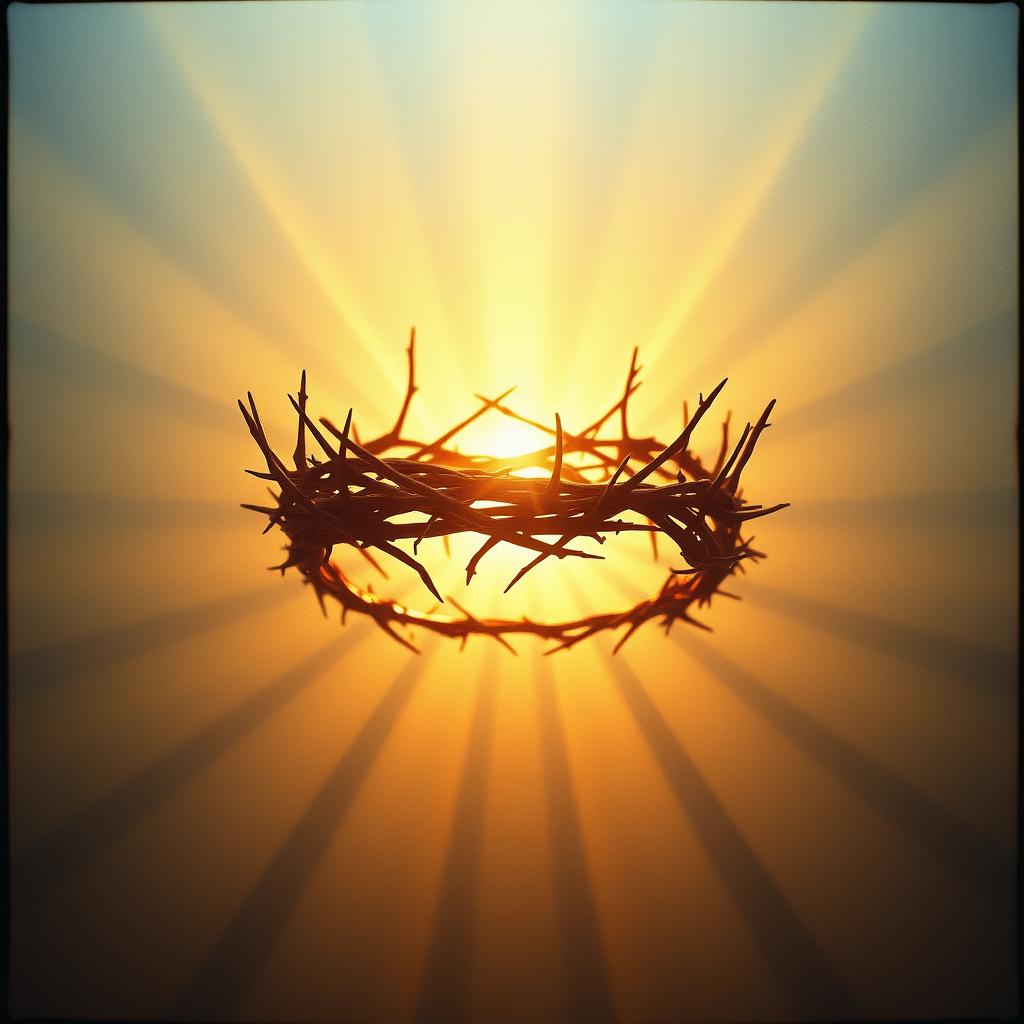
Are you the King? (CLICK ON THE PICTURE BELOW TO LISTEN TO SONG)
___________________
(1) Wright, N.T. John for Everyone, Part 2, sick, (202), 113.
(2) Gregory the Great, Commentary on the Song of Songs, Cistercian Publications, (2012)

 UNBLOCKING THE WELL OF THE LIVING WORD
Leave a comment