
John 19:16b–42
Focus verse: ‘These things happened so that Scripture would be fulfilled’ (John 19:36)
Old Testament lens: ‘They divide my garments among them’ (Psalm 22:18); ‘I am thirsty’ (Psalm 69:21); ‘he protects all his bones, not one of them will be broken.’ (Psalm 34:20)
John’s portrayal of Jesus’ crucifixion is of a divine fulfilment of the Old Testament. It is rich in scriptural allusion and theological meaning. In John’s narrative, scriptural references are typically introduced with phrases like ‘as it is written’, aligning with Jesus’ public ministry. However, as the Gospel transitions into the passion story, the language shifts dramatically to stress that these events are happening ‘so that Scripture might be fulfilled.’ This, argues Richard Hays, is John’s theological response to Jesus’ suffering, a way of showing that Jesus’ death was not a failure but the climax of divine purpose.(1)
John uses quotation formulas frequently, more like Matthew than Mark or Luke, suggesting a deliberate strategy. The prominence of the Psalms in John’s citations is significant. Over 60 per cent of his Old Testament references come from the Psalter. This reflects John’s focus on the suffering of Jesus, as the Psalms often express the voice of a righteous sufferer, which the early Christians saw embodied in Christ. While John engages less with the Pentateuch than other Gospels, this reflects a deeper Christological emphasis. For John, Israel’s story finds its true meaning in Jesus. Israel’s Scriptures become the interpretative framework through which Jesus is understood as their climactic fulfilment. In this way, Israel is not diminished in John’s narrative but absorbed fully into the Christological vision.
Psalm 22, in particular, forms the backdrop for the crucifixion, especially in the soldiers gambling for Jesus’ clothes. This fulfils prophecy and presents Jesus as the righteous sufferer and true king. The phrase ‘It is finished’ (Greek: tetelestai) signifies not defeat but the completion of Jesus’ mission — a word often used to indicate a debt paid in full. Jesus’ death thus becomes the moment of cosmic redemption, the full payment for sin. In John 19:31–37, Tom Wright highlights further scriptural fulfilments, including Psalm 34 (‘Not one of his bones will be broken’) and Zechariah 12:10 (‘They will look on the one whom they pierced’), emphasising Jesus as the Messiah who bears the sorrow and shame of Israel, and of the world.(2)
The Early Church Fathers who inspired the Celtic Church
St Simeon Stylites (c390–459), lived atop a pillar (stylos in Greek) for 37 years
Theodoret gives a kind of summary of what Simeon taught by example and word: ‘He taught that the kingdom of heaven is gained not by ease, but by labours; not by honours, but by humility; not by indulgence, but by self-restraint.’ (3)
St Simeon Stylites is one of the most extraordinary and influential ascetics in Christian history, especially within the Eastern Orthodox Church. His radical form of self-denial and unique lifestyle made him a symbol of extreme devotion and inspired many imitators. By living atop a stone pillar in the Syrian desert, he avoided worldly distractions, cultivated unceasing prayer, and became a visible sign of repentance to all. The pillar began at about nine feet, eventually increasing to over 50 feet high. He stood, knelt, and prayed exposed to the elements, rain, sun, snow, for nearly 37 years. Food and water were hauled up to him in baskets by disciples. He would tie himself to the pillar to avoid falling asleep and toppling off. Thousands of people, pilgrims, and even Roman emperors would come to see him or seek advice.
His voluntary suffering was understood as kenosis (self-emptying). His harsh asceticism was viewed as a battle not against flesh and blood, but against spiritual forces. The pillar made him a visible beacon of repentance and a spiritual intercessor for the people. People began to see him as a bridge between heaven and earth, a living icon. Despite being elevated above the people physically, he remained deeply pastoral, preaching, interceding, and counselling from his pillar. Simeon’s life was seen as a living crucifixion. His solitude mirrored Christ’s loneliness on the Cross. His arms outstretched in prayer recalled Christ on the Cross. His reputation spread across the Roman Empire, even Emperors Theodosius II and Leo I sought his prayers.
Celtic saints were deeply inspired by the suffering of Jesus, his crucifixion, death, and burial. Kevin of Glendalough’s ascetic practices were a conscious sharing in Christ’s suffering and redemptive love, similar to themes in John 19. Kevin lived alone in a narrow cave called St Kevin’s Bed, a cramped rock ledge above a lake, echoing Christ’s isolation during His Passion. Like Jesus who ‘carried His own cross’ (John 19:17), Kevin voluntarily carried the burden of solitude to draw closer to God. His retreat into the wilderness mirrored Christ’s own withdrawal before the Passion.
Stories tell of Kevin standing for hours in cold water, arms outstretched in the shape of a cross, in prayer. This posture strongly echoes Jesus’ crucifixion in John 19:18: this was a way to ‘crucify the flesh’ and join in Christ’s redemptive work. Kevin refused comfort, status, and control, even when his monastic fame grew. Like Jesus before Pilate (John 19:10–11), who refused to defend Himself, Kevin rejected worldly power in favour of divine obedience. He left leadership of the monastery at times to return to his cave, modelling Christ’s self-emptying humility (kenosis). Kevin mirrored the paradox of the Cross, ultimate suffering. Glendalough became a major pilgrimage site and symbol of Celtic Christian monasticism. He was remembered for his kind of ‘living crucifixion’ through his daily surrender, that is the Celtic ideal of the ‘green martyr’ — one who dies not by blood but by self-denial and communion with Christ in nature and suffering.
REVIVAL
The death of Jesus Christ was a climactic moment in Israel’s history. In British history there have been key moments of opportunity, times of transition and decision, but nothing that compares with this time of fulfilment in Israel’s history. Lou Engel says, ‘There are moments in history when a door opens. Great revolutions for good or for evil occur in the vacuum created by these openings. It is in these times that key men and women and even entire generations risk everything to become the hinge of history. That pivotal point that determines which way the door will swing.’ (4)
We have an opportunity at this hinge moment in British history, to line up with Jesus Christ who is praying at the right hand of the Father, and to pray with Him that all the blood shed by the martyrs of the faith, and the lives of the missionaries that were sown into the nations, would be turned around, and bear fruit, fruit that remains.
PRAYER
Help me carry Your burden in prayer at this ‘hinge moment’.
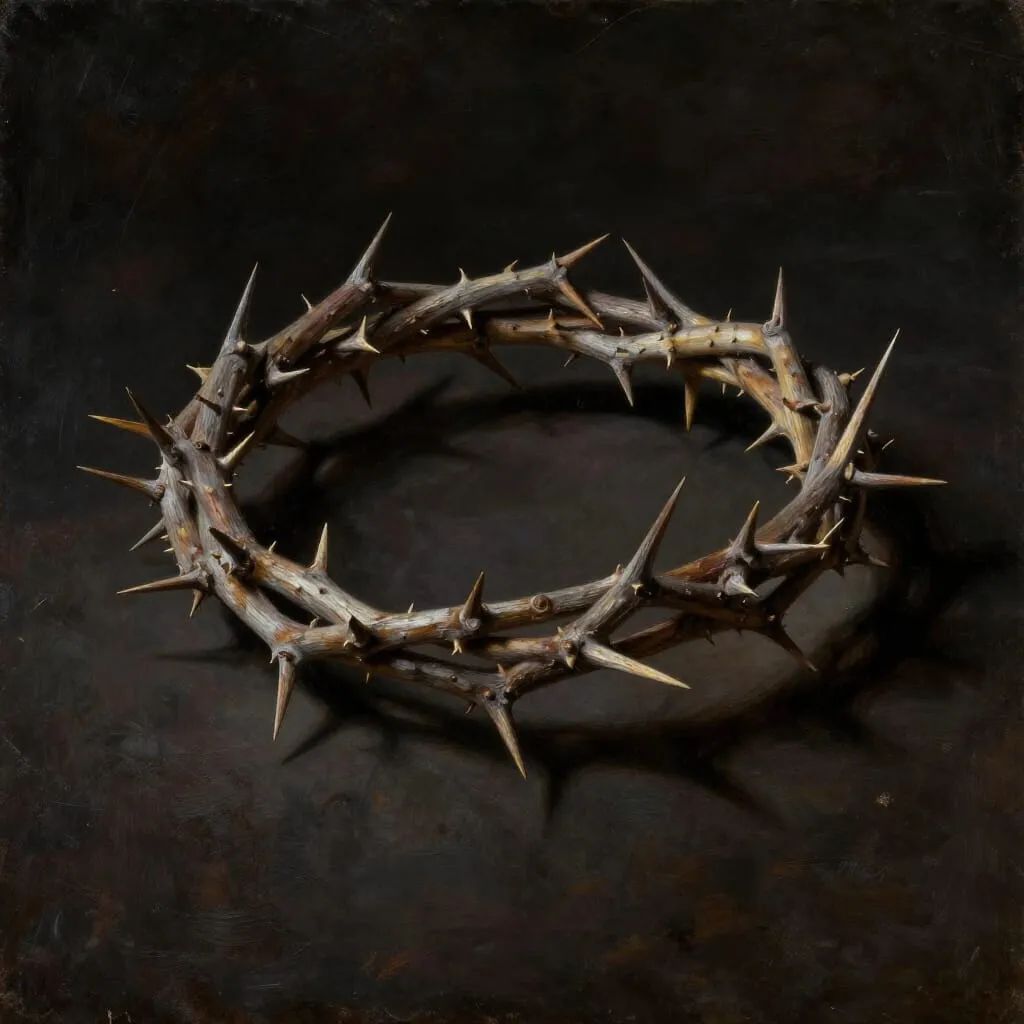
This was to fulfil ( CLICK ON PICTURE BELOW TO LISTEN TO SONG)
__________________
(1) Hays, R, Echoes of Scripture in the Gospels, Baylor University Press, 2017.
(2) Wright, N.T.John for everyone, SPCK Part 2, (2002).
(3) Theodore of Cyrrhus, The Life of Simeon Stylites, Liturgical Press (1992)
(4) Engel, L. Battle for Britain Prayer Conference, Manchester, 2026

 UNBLOCKING THE WELL OF THE LIVING WORD
Leave a comment